
 347-331-7600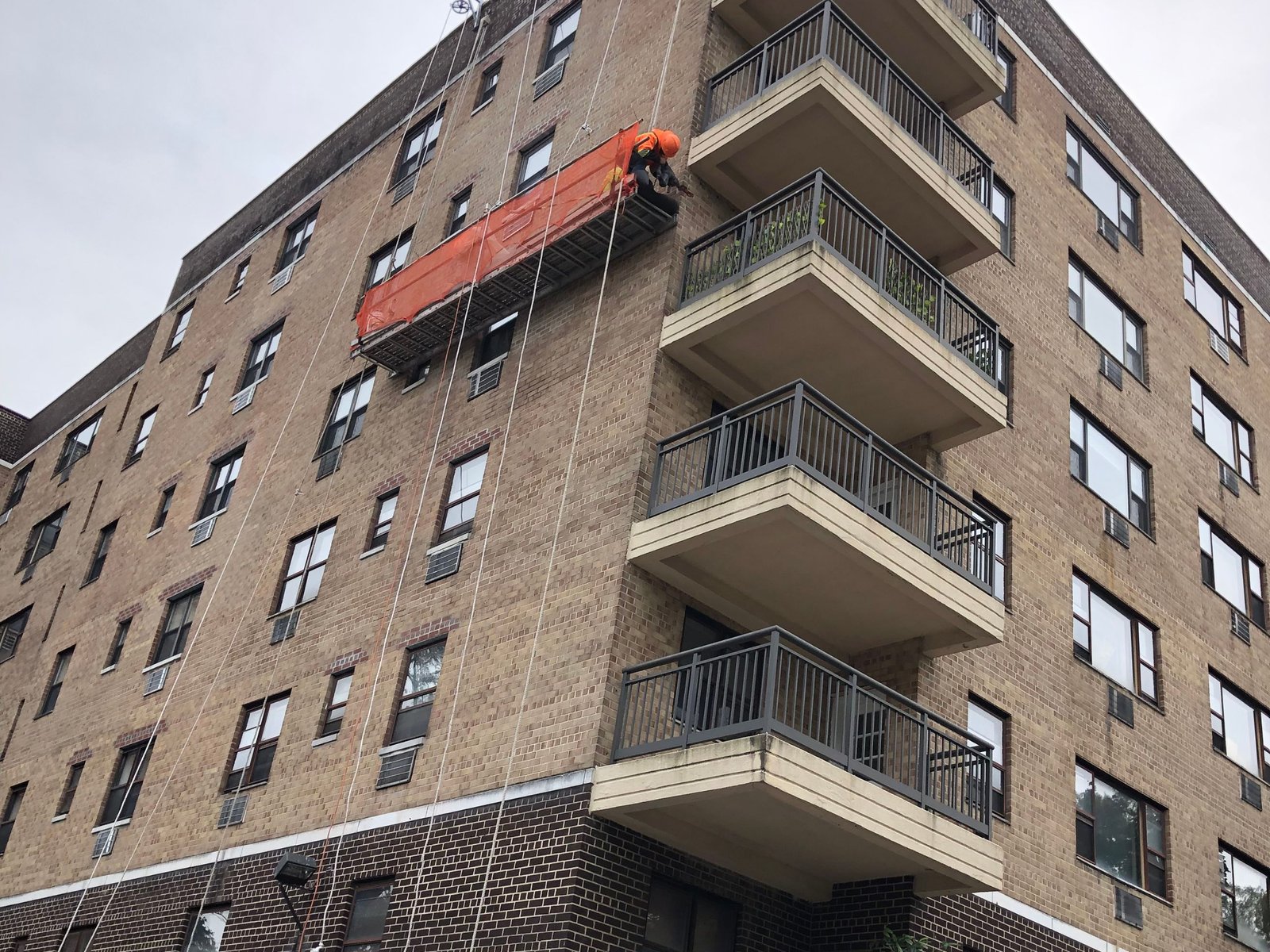
 Residents and developers in Queens find property ownership and or management tasked with different challenges. Over time, many residential and commercial buildings in this part of New York suffer from retrogression due to age and harsh weather, thus necessitating proper maintenance. Choosing who will handle your particular specification does not always depend on the price – it is about the preservation of assets and their prolonged life expectancy. When intending to go for repairs and restoration, decide on a reliable Building Repair contractor Queens residents ought to work with.
With so many choices in such a competitive sector, it can be confusing when it comes to assessing the experience, credentials, and quality of service. A building repair contractor Queens inhabitants use should be familiar with local building regulations as well as the issues associated with construction and the requirements of both residential and commercial premises in Queens. Every factor to be taken into account will be covered in this publication, so you can be certain to make the right decision.
Understanding Your Property’s Repair Needs
The first thing you must do before initially going on contacting a contractor is to know what his building requires. Therefore, sometimes no lenient jobs are wanted, and sometimes, on the other hand, mending a severe structural problem may seem the most viable option. So, identifying the prospect of the job can help you clearly communicate needs and to provide a comparative view of your overall expectations.
Older facilities in Queens are very likely to face such recurring problems as cracks in masonry, façade dilapidation, water infiltration or foundation stress. For the newer properties, construction defects or material failure are much more likely contributors to morbidity. It does help to determine if your project involves preventive care maintenance, safety measures, or on emergency repairs.
After acknowledging your wants, you can focus on enquiring of only those contractors able to provide valid restoration services rather than experimenting with a generic contractor. Make sure these methods intend one thing: the contractor will possess adequate equipment and materials for the situation.
Before employing them, you should evaluate certain aspects:
- the structural integrity and degree of visible damage found
- adherence to local safety codes
- the focus on short-term repairs vs. long-term solutions
- Considering these factors in advance may facilitate discussions with several contractors and expedite the hiring process.
Why Hiring a Licensed Contractor in Queens Matters
Licensing is one of the most important factors for contractors to consider from the outset. It has different significances: it legally safeguards homeowners from unnecessary jurisdictions and shields one from property loss; the contractor has to apply and be reviewed in relation to specific standards set forth by state and local governments and must provide proof of insurance.
Although unlicensed contractors may offer lower costs, two important disadvantages are that they may cut corners or not comply with electrical/mechanical-safety codes. This could well result in hefty fines, failing in-section, creating unsafe home environmental conditions, or even life-threatening disasters. Licensed con-tractors, on the other side, do have accountability-any failure in service delivery is due to some kind of inexistent or poorly-enforced regulation under a license.
Benefits of hiring licensed professionals include:
- Compliance with Queens and NYC building codes
- Insurance coverage for accidents or damages
- Higher quality workmanship
Licensing is not just about paperwork, but safeguarding your property, goodwill, and more.
Evaluating Experience and Local Expertise
Queens is one of the most mixed boroughs and structured densely and therefore, not every contractor understands this complexity. Engaging in local building companies based in Queens, NY will give the advantage of knowing the patterns and trends of Queens locality in relation to architecture, zoning regulations, and weather events.
Building contractors who have experience in a particular location will help you step into architectural designs and facade treatments for brickworks and pre-war buildings and mixed use of the commercial area of Queens. They are well-versed with the permit requirements and the inspection process to avoid any concerns that may delay the project.
Applying experience to problem solving, the contractor has the skill set to draw on his/her experience in resolving inevitable technical problems and recommends a good but durable solution in the long run rather than helping in self-destruction in the next few months. Ask about the number of years experienced and call for submission of substantial evidence.
What to look for in experienced contractors:
- Times spent with the Queens locals
- Does the document concern a familiar one in term of construction repairs?
- Knowledge of challenges that are connected to local constructions
Local expertise at the end of the day helps reduce risks, and augments the chances of successfully implementing repairs that will last.
Checking Reputation, Reviews, and References
A contractor’s reputation gives away tons about his/her reliability and the quality of work. The reviews on-line, the references and the testimonials all give the insight about how the contractor works in real-life settings. That’s the reason to look beyond star ratings, and definitely read the detailed feedback on both the strong points and weak points.
Consistently good reviews point towards excellence in meeting the schedules, customer relation, and craftsmanship. Sufficient frequent complaints about delays, overruns, or hidden costs must be taken seriously. There is nothing wrong with inquiring for direct feedback from Queens’ recent clients.
Speaking with former clients can substantiate the claims made by the contractor and allow you to learn how the contractor dealt with unexpected issues. This step is especially relevant in the greater attention to coordination and accountability in large or multifaceted projects of building restoration services.
Ways to analyse reputation effectively are as follows:
- Read multiple reviews across all platforms
- Ask for references located in the area
- Verify the result of a completed project
In a nutshell, a professional reputation adequately subjoined by actual results tells you in no uncertain terms about the quality of a contractor.
Appraising Quotations Beyond Just Focusing on Price
While the price is an essential preliminary consideration, the decision should never be made on price alone. Precise and clear estimates indicate professionalism and knowledge of what you are paying for. In their detail, a quality contractor provides an estimation of labor, materials, timeframes, and other potential contingencies.
Very low estimates suggest substandard inputs and hasty workmanship. Conversely, very high estimates are usually commensurate with high-grade materials, high expertise, and extended warranties. It’s better to compare them head-to-head and then evaluate value rather than price alone.
Clear and correct communication during the estimation process is an indication of good faith on the contractor’s part. Contractors spending time to explain costs and welcome questions are likely to be truthful partners throughout the project.
During the estimation comparison, pay attention to:
- -What the scope of work actually includes
- -The quality of the materials used in the proposal
- -Warranty and after-project support
With a good, detailed estimate, lock up your choice in all confidence.
Contracts, timelines, and warranties are important to understand
There should be a written contract that defines both parties’ rights and obligations right at the start. It should indicate the scope of work, the payment schedule, the beginning and end dates, and responsibilities. Do not engage contractors who hesitate to enter into a formal agreement.
For occupied structures, having timelines is especially critical since delays can significantly disrupt tenants or business activities. Cristian Builders, as reliable contractors in Queens, NY, proposes realistic schedules and communicates in a timely manner, even if projects are delayed.
Warranties prove the builders have faith in their own workmanship and materials. Find out what the warranty will cover as well as the period it remains in force. A strong warranty means that any problems occurring once construction is completed will be rectified at no cost to the entity having the structure built.
Some of the key components to look at in a contract would be as follows:
- Clear description of the project
- Schedules of payments
- Particularly warranty provisions
Projects that have been laid down in crystal clear language stand revealed with no misunderstandings lingering to derail it.
Management of an Urgent Structured Repair and Emergency Response
Certain issues really cannot wait at all. A hole in the foundation, a severe leak, or a facade component whose failure can lead to harm or serious damage must receive immediate responses. Hence, hazard mitigation comes first. In such cases, working with an emergency building repair contractor is crucial.
Emergency contractors need to be available at once, in a position to stabilize the situation, and be able to provide temporary and permanent solutions. Being professional and licensed are two basic characteristics that should never be lost sight of, even in emergency cases.
Having a reliable name attached to emergencies, ahead of time, shall be proper wisdom. Having an understanding before the fact will help save valuable time in late night / early morning contract management and ensure that with an emergency contractor it comes quickly.
The following are the essential services:
- A Fast Response and Availability
- Compliance with All Safety Standards
- A Good Deal of Practical Experience in Dealing with Urgent Structural Repairs
- The best way to effectively avoid costly emergencies is continued preparedness.
Conclusion: Choose a Building Repair Contractor Wisely to Secure Your Property in the Long Run
This is a good faith investment that will maintain safety, increase the net worth of your house, and allow it to stand the test of time. If you set your repair needs and all associated construction priorities, holding onto their licensing and years of experience in construction, and carefully valuate reputation and contracts, this will significantly decrease risk and heighten your success. Buildings in Queens present a unique set of structural and regulatory problems; thus, local expertise can pay for itself.